
 EN
EN
 ar
ar bg
bg hr
hr cs
cs da
da nl
nl fi
fi fr
fr de
de el
el hi
hi it
it ko
ko no
no pl
pl pt
pt ro
ro ru
ru es
es sv
sv tl
tl iw
iw id
id lv
lv lt
lt sr
sr sk
sk sl
sl uk
uk vi
vi et
et hu
hu th
th tr
tr fa
fa ms
ms hy
hy ka
ka ur
ur bn
bn mn
mn ta
ta kk
kk uz
uz ku
ku
What Is a Vibrating Wire Strain Gauge? Advantages, Uses, and Limitations
Picture a bridge engineer sitting in an office, watching structural data stream in from sensors embedded deep within concrete piers over a decade ago. The readings are still accurate, and the signal is still stable. This level of long-term reliability is not a happy accident. It is the result of choosing the right technology for the job.
The workhorse behind this endurance is the vibrating wire strain gauge. This sensor has consistently outlasted competing technologies in demanding environments. This article will explain exactly how a vibrating wire strain gauge works, evaluate its core advantages and honest limitations, and help you match the right sensor type to your next project.
What Is a Vibrating Wire Strain Gauge?
To understand the sensor, we must first define what it measures. In civil and geotechnical engineering, "strain" refers to the tiny amount of deformation a material experiences when subjected to stress or load. Measuring this strain is vital. It tells engineers if a bridge is bending too much, if a dam is settling unevenly, or if a tunnel lining is taking on dangerous pressure.
A vibrating wire (VW) strain gauge measures this deformation using a brilliantly simple operating principle. Inside the gauge casing sits a tensioned steel wire. When an electrical pulse excites this wire, it resonates at a specific frequency that is directly proportional to its tension. When the structural material around the gauge deforms, it stretches or compresses the gauge body, altering the tension of the internal wire and changing its resonant frequency. This frequency shift is then converted into a precise strain reading.
This frequency-based signal is highly robust. Unlike traditional resistive (foil) strain gauges, which rely on voltage changes that can weaken over distance, a vibrating wire signal travels effortlessly over long cable runs. This makes the VW gauge the ultimate structural health monitoring sensor for harsh environments and multi-year deployments.
To accommodate different construction scenarios, these sensors typically come in three main configurations: surface mount, embedment, and surface welded.
Types of Vibrating Wire Strain Gauges
Selecting the correct gauge type depends entirely on your project phase and the materials involved.
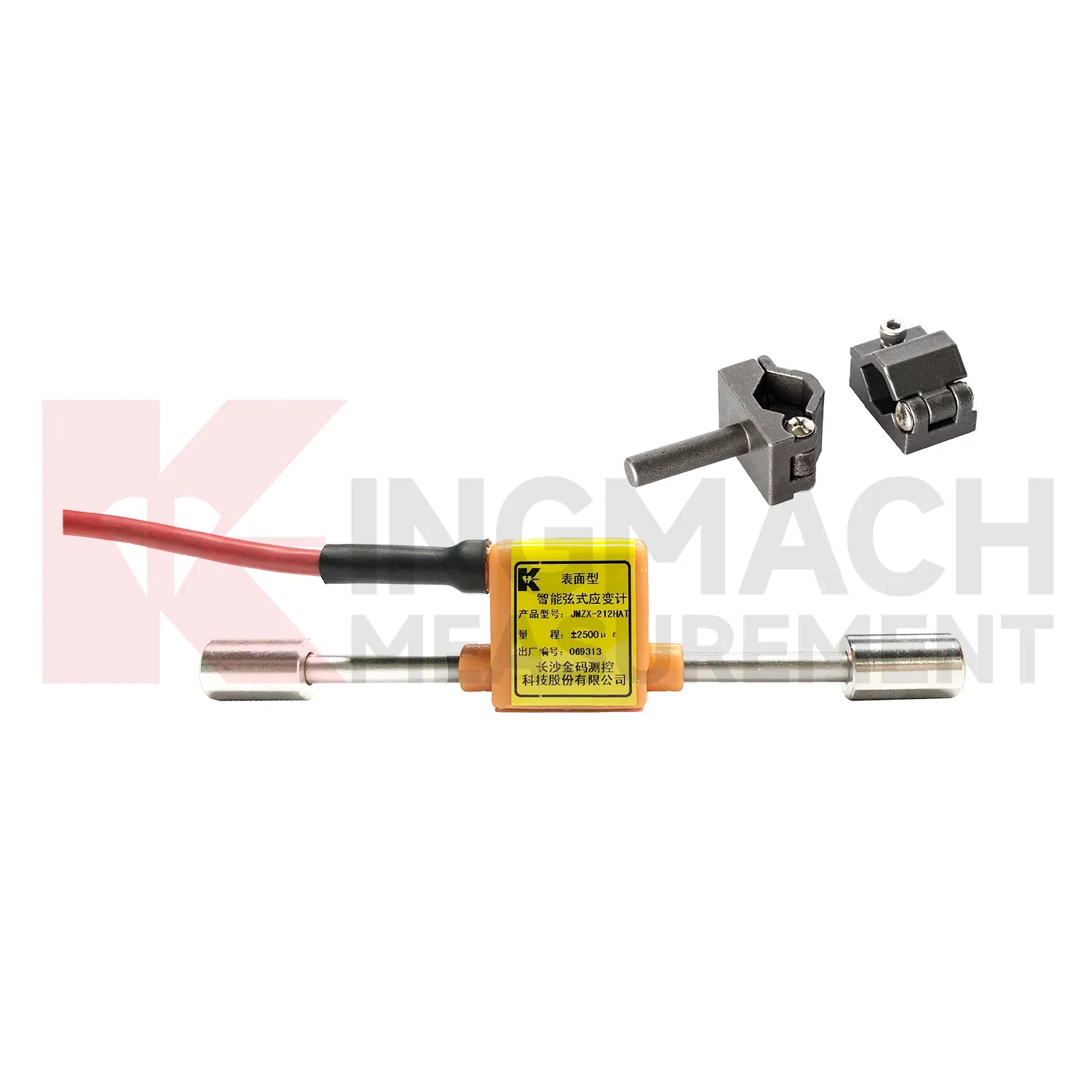
Surface Model: Engineers bolt or epoxy-bond these gauges directly to concrete, steel, or timber surfaces after construction is complete. They are the go-to choice for post-construction monitoring or retrofit projects. A prime example is the JMZX-212HAT/HB Smart Vibrating Wire Strain Gauge, which offers high precision for existing infrastructure.
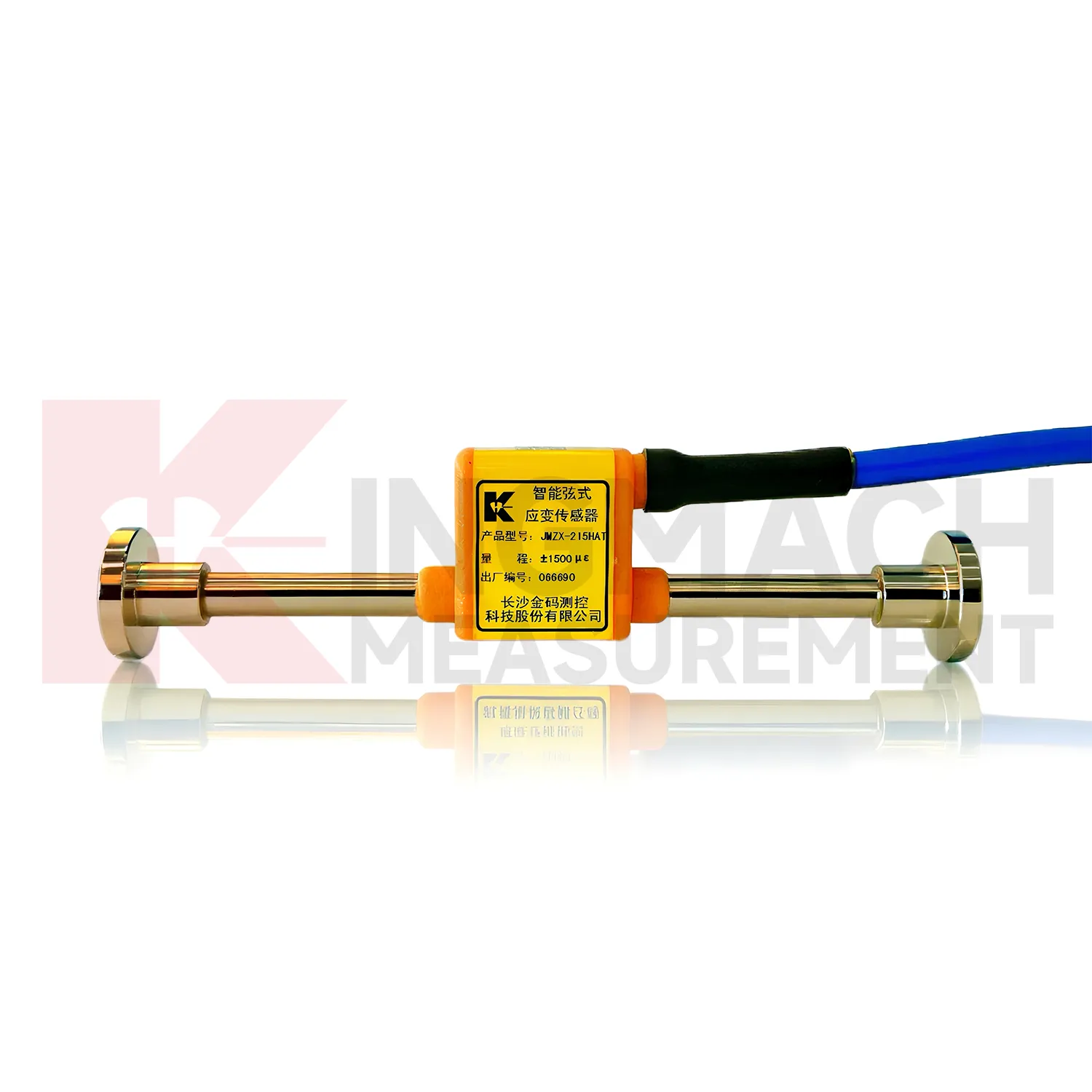
Embedment Model: Workers cast these gauges directly into fresh concrete. The sensor permanently becomes part of the structure. They are ideal for monitoring dams, piled foundations, and mass concrete pours.
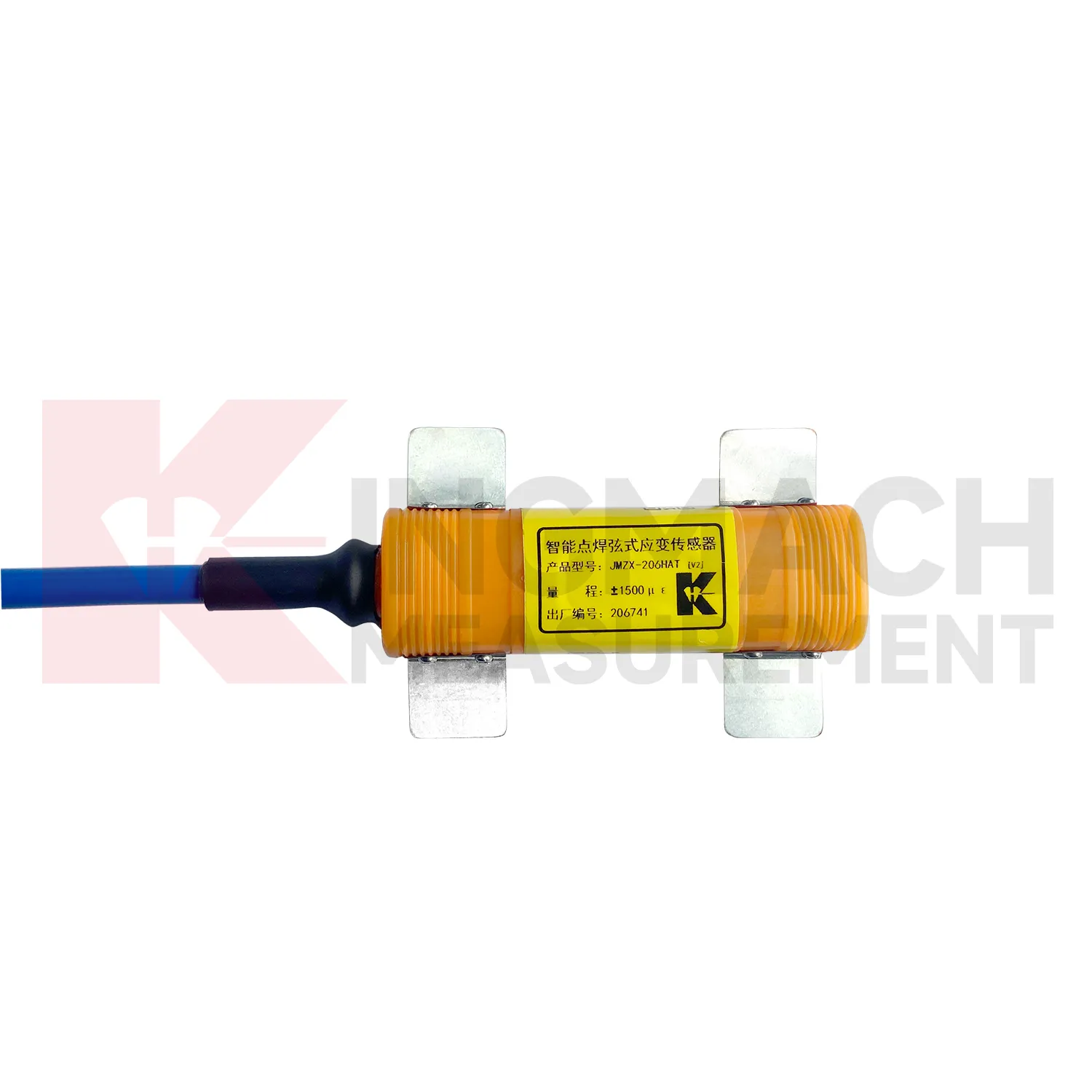
Surface Welded Model: Technicians weld these directly to steel members like bridge girders, steel piles, and wind tower flanges. A welded connection withstands vibration and cyclic loading far better than adhesive bonds.
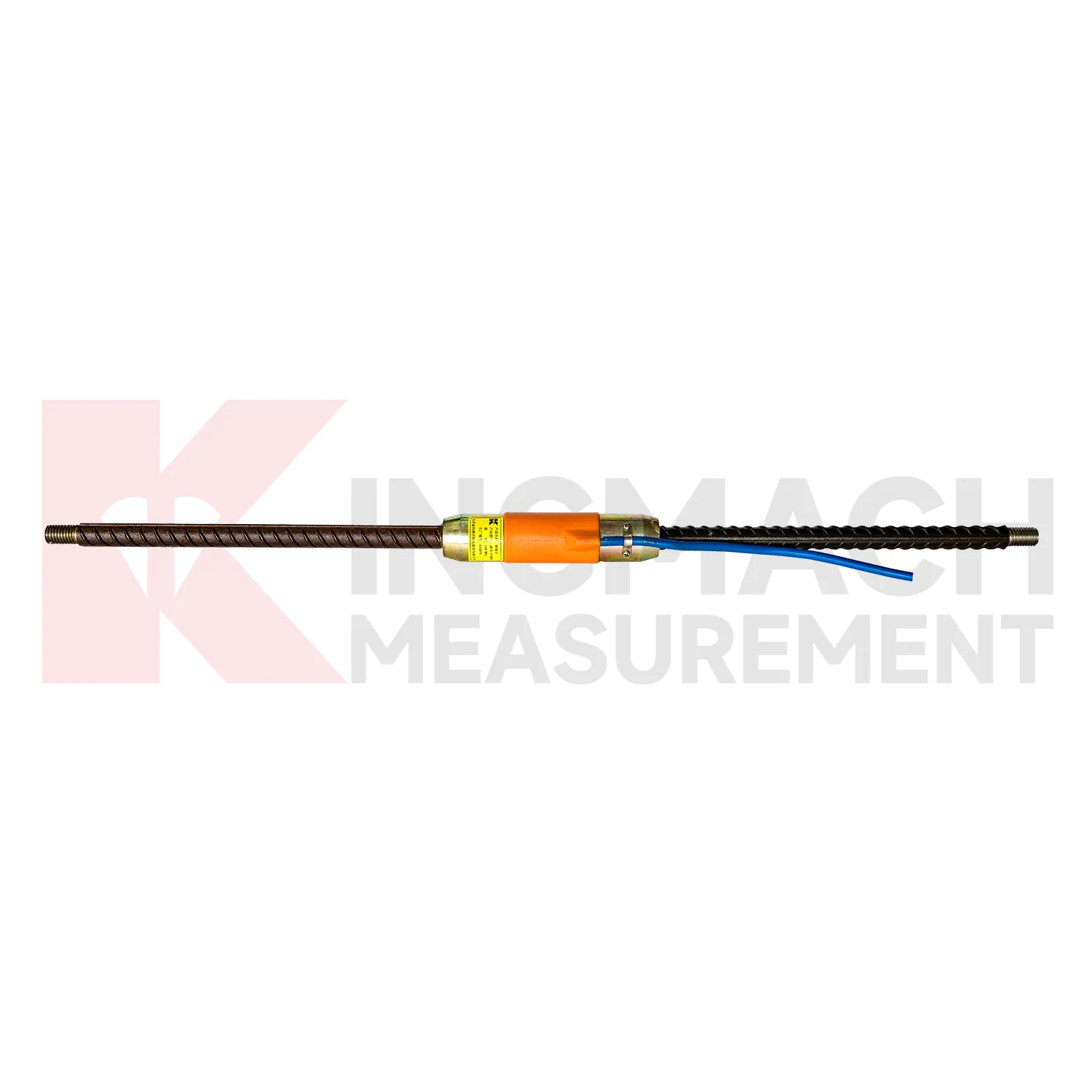
Rebar Strainmeters: Construction crews place these hollow tubular sensors in-line with reinforcing bars. They directly measure the axial force in the rebar, which is critical for understanding the health of piles, retaining walls, and tunnel linings.
Quick Selection Guide
| Project Phase / Material | Recommended Gauge Type | Common Application |
|---|---|---|
| Existing Concrete or Timber | Surface Mount | Retrofits, historical building monitoring |
| Fresh Concrete Pours | Embedment | Dams, foundations, retaining walls |
| Existing Steel Structures | Surface Welded | Bridges, wind turbine towers, steel piles |
| Reinforced Concrete Structures | Rebar Strainmeter | Load-bearing piles, tunnel linings |
Key Advantages of VW Gauges
Engineers choose vibrating wire sensors as their primary tool for monitoring structural integrity over extended time periods because this technology provides permanent monitoring capabilities. The primary advantages include:
Exceptional Long-Term Stability: The frequency output of a VW gauge maintains complete stability because its performance remains unaffected by cable resistance changes, connector moisture infiltration, and supply voltage fluctuations. These issues frequently plague resistive gauges over time, but VW sensors remain stable for decades.
Strong EMI/RFI Immunity: The construction sites create an electrically noisy environment. Diesel generators and welding equipment, together with power lines, produce interference. The frequency-domain signals can easily pass through these environments, which eliminates the need for costly and heavy cable shielding systems.
Long Cable Runs: VW sensors maintain their signal quality when they operate with 1,000 meters of cable, which extends beyond this distance. This allows engineers to route all data back to a single, centralized data logger on large dam or tunnel sites.
Wide Operating Temperature Range: The sensors maintain their operational functions across extreme temperature ranges, from subzero alpine regions to tropical infrastructure construction sites, enabling their use as a standard monitoring system for geotechnical applications throughout the world.
Built-in Thermistors: Most modern VW gauges include an internal thermistor, which functions as a built-in thermistor. The system uses a single cable run to deliver temperature data, which enables automatic temperature adjustments that enhance the quality of collected data.
Digital and Smart Variants: The smart models of today use HAT and HB suffixes to show their capability of connecting traditional systems with modern Industrial 4.0 operations. The devices offer RS-485 output functionality together with built-in data storage capabilities and seamless connection to current IoT data logging equipment and SCADA systems.
Project Applications of Vibrating Wire Strain Gauges
Vibrating wire strain gauges act as the nervous system for modern infrastructure. They provide critical data across a wide range of civil engineering projects.
Bridge and Viaduct: Engineers use surface mount and welded gauges to monitor girder flexure, bearing loads, and thermal expansion in projects that require special attention for both long-span structures and high-traffic systems.
Dams and Hydraulic Structures: The dedicated embedment gauges, which engineers place into mass concrete structures, track the three fundamental processes of creep and settlement and pore pressure interactions from the beginning until the end of the structure's operational life, which lasts several decades.
Tunnels and Underground Works: The gauges that engineers install on tunnel linings and rock bolts function to monitor convergence, which occurs because of overburden pressure. The system provides advance warning to engineering teams about structural shifts that occur before they can observe any visible cracking.
Tall Buildings and Foundations: Rebar strainmeters and embedment gauges in deep foundations verify the load transfer assumptions made during design. They close the gap between geotechnical prediction and construction reality.
Wind Turbine Towers: The surface-welded gauges, which are attached to tower flanges, monitor fatigue-critical joints of wind turbine towers during wind loading. The importance of this development has increased because onshore and offshore wind farms are expanding throughout the world.
Retaining Walls and Slopes: Distributed gauge arrays monitor earthen mass movement while they track the process of progressive failure through their measurement capabilities. The gathered information belongs to the category of essential data, which protects railway and highway embankment projects from potential dangers.
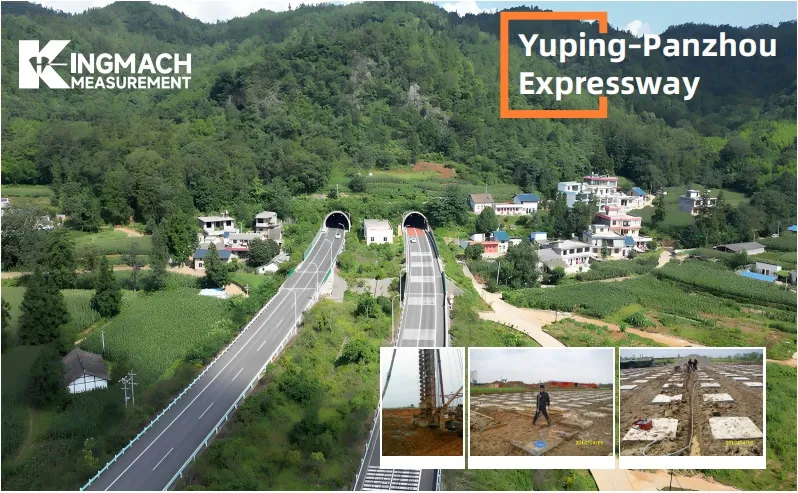
Limitations and Honest Trade-offs
No sensor is perfect for every application. Understanding the limitations of VW strain gauges ensures you specify the right tool for the job.
Not Suited for Dynamic Measurements: The VW gauges measure quasi-static strain because they detect only slow changing movements. For monitoring high-frequency vibrations that exceed 1 to 2 Hz, you need to use either accelerometers or resistive foil gauges.
Higher Unit Cost: The precise manufacturing process together with the internal electronic components of a VW gauge, results in higher costs compared to simple foil gauges. The cost becomes justifiable when used for permanent installations, yet it remains unnecessary for temporary laboratory experiments.
Requires Compatible Readout Equipment: VW signals need specific readout units or data loggers that can match their frequency requirements. The procurement teams must verify budget constraints together with compatibility needs at the beginning of their planning process.
Embedment Gauges Are Non-Retrievable: The embedment gauge becomes permanent after its installation in concrete. The system has permanent installation errors because they cannot be fixed. The system requires factory calibration together with expert installation because these two elements guarantee proper system performance.
Extreme Long-Term Calibration Drift: While VW sensors are exceptionally stable, they can experience minor calibration drift over extreme multi-decade spans. Engineers should review published drift specifications for projects exceeding 20 to 30 years without planned recalibration access.
VW vs. Other Sensor Technologies
How does the vibrating wire strain gauge compare to alternative structural health monitoring sensors?
VW vs. Resistive (Foil) Gauges: VW gauges easily win on accuracy over long cables and extended timeframes. Foil gauges win on lower initial cost and high-frequency dynamic response.
VW vs. Fiber Optic (FBG) Gauges: FBG sensors excel at distributed sensing along a single continuous fiber and offer ultra-long-haul transmission. VW sensors win on overall cost, ecosystem maturity, and the ease of replacing readout hardware.
VW vs. MEMS Sensors: MEMS (Micro-Electro-Mechanical Systems) excel in high-frequency, dynamic applications. VW technology remains the superior choice for static and quasi-static permanent monitoring.
Technology Comparison Table
| Sensor Type | Best Use Case | Long-Term Stability | Typical Infrastructure Fit |
|---|---|---|---|
| Vibrating Wire | Slow, static strain monitoring | Excellent (Decades) | Dams, tunnels, foundations, heavy civil |
| Resistive (Foil) | High-frequency dynamic testing | Poor to Moderate | Lab testing, short-term diagnostics |
| Fiber Optic (FBG) | High-density distributed arrays | Excellent | Pipelines, massive continuous spans |
| MEMS | Dynamic vibration & tilt tracking | Good | Seismic monitoring, active bridge dynamics |
Installation Best Practices
Getting the most from your civil engineering sensor requires meticulous installation.
Surface Mount: Proper surface preparation is mandatory. Grind the surface flat and degrease it thoroughly. Ensure the gauge is oriented correctly with the principal stress axis and install physical covers to protect the sensor from construction traffic.
Embedment: Securely position the gauge within the rebar cage and maintain strict concrete cover requirements. Route the signal cables carefully to avoid kinking or tearing during the concrete pour. Always take a baseline zero-reading before the concrete sets.
Surface Welded: Adhere strictly to weld quality requirements. Allow the metal to undergo post-weld stress relief and complete its cool-down phase before establishing the initial baseline reading.
Universal Tips: Always record baseline readings immediately upon installation. Utilize the built-in thermistor for temperature compensation practices. Finally, establish a clear cable labeling protocol for multi-sensor arrays to prevent confusion at the data logger terminal.
How to Specify and Source Your Gauge
When you are ready to procure a vibrating wire strain gauge, focus on the details. Create a strict specification checklist that includes the required measurement range (measured in microstrain, or με), gauge length, operating temperature window, desired output type (analog vs. RS-485 digital), cable length, and IP rating.
When speaking with suppliers, ask the right questions. Request sample calibration certificates. Ask about cross-ta3245lk immunity if you are installing large multi-sensor arrays. Verify that their sensors are natively compatible with your preferred data logger brand, and confirm delivery lead times for large commercial quantities.
For projects requiring high-precision surface monitoring, the JMZX-212 series offers an excellent balance of durability and digital integration, meeting stringent international infrastructure standards.
Conclusion
The vibrating wire strain gauge earns its place in long-term structural monitoring not through flashy novelty, but through proven reliability. It measures change through robust frequency signals, offering exceptional stability, strong interference immunity, and seamless data transmission over massive construction sites. While they are not meant for dynamic, high-speed impact testing, their quasi-static performance is unmatched. It is a quality that matters most when these sensors are expected to safely outlive the construction crews that installed them.
Ready to equip your next project? We invite you to submit your project specifications to our engineering team for personalized sensor selection support. Contact us today for a quote or to download comprehensive product datasheets.
FAQs
1. How accurate is a vibrating wire strain gauge?
When installed correctly and temperature-compensated using its built-in thermistor, a high-quality VW strain gauge typically offers an accuracy of ±0.1% to ±0.5% of its full scale, making it highly reliable for structural health monitoring.
2. Can VW gauges work in submerged conditions?
Yes. Embedment and surface-mounted VW gauges are routinely sealed with high IP ratings (often IP68). This allows them to operate permanently while submerged in water, which is essential for dam and deep-foundation projects.
3. What is the typical lifespan of an embedded strain gauge?
Because the internal steel wire is hermetically sealed and protected from external oxidation, an embedded VW strain gauge can easily function accurately for 25 to 50 years, often lasting the entire design life of the host structure.
4. Do I need special equipment to read the data?
Yes. Because VW gauges output a frequency signal rather than a simple voltage, you must use a dedicated vibrating wire readout unit or a data logger specifically configured with a vibrating wire interface module.
5. Can a broken cable on an embedded gauge be repaired?
If a cable is severed outside the concrete structure, it can be spliced using proper waterproof junction boxes. However, if the cable is broken deep inside the concrete pour near the sensor body, the gauge is permanently lost. This highlights the need for careful cable routing during construction.